




Latest Blogs

A short overview of the insights you'll find here - covering industry trends, agency updates, success stories, and expert perspectives.
Selling the Dream in 4K: How VFX and Generative AI Are Transforming Customer Journeys
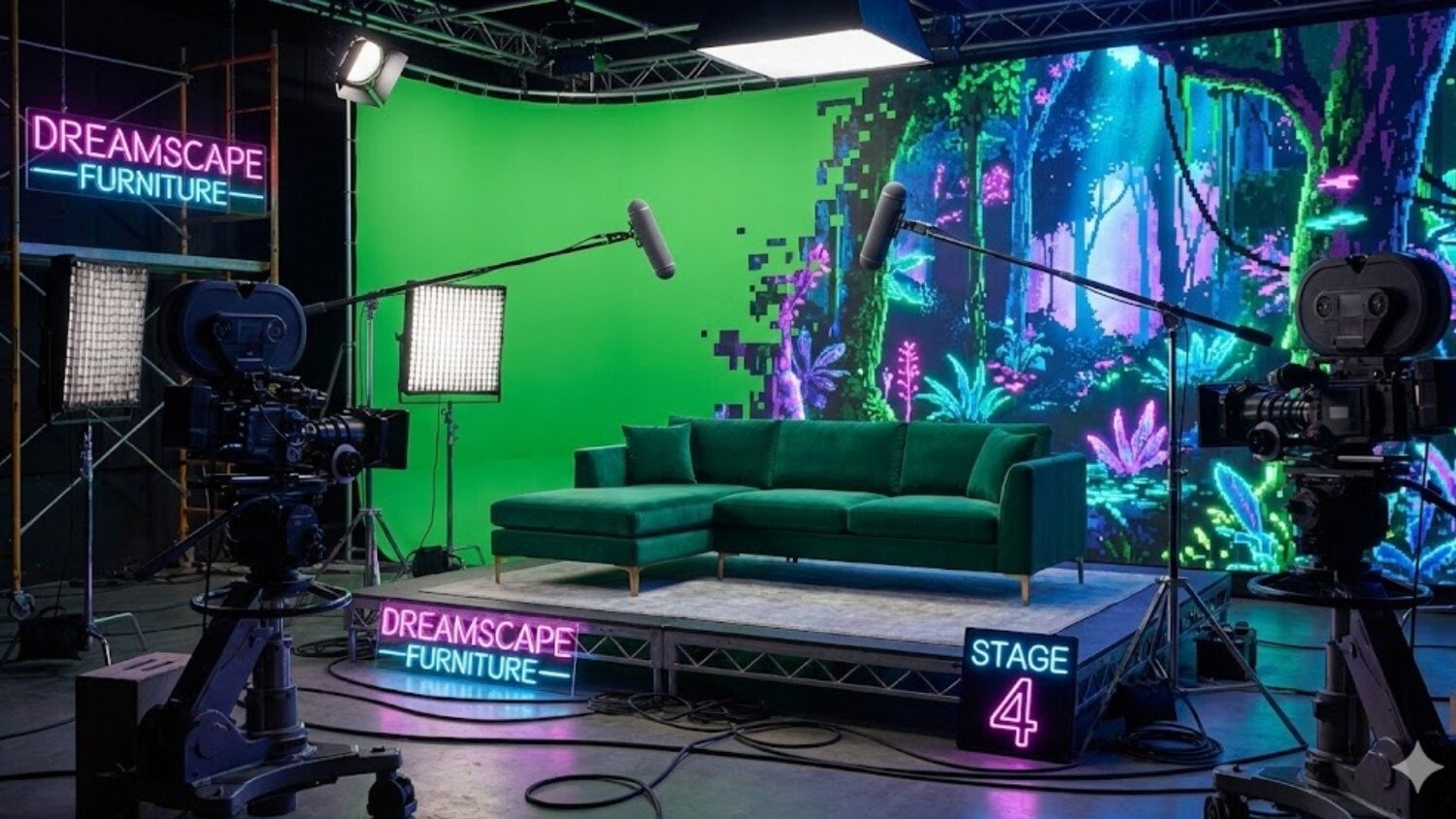
Remember the last time you tried to buy something significant—a home, a car, or even a high-end sofa—based on a swatch of fabric or a 2D floor plan? You probably squinted at the blueprint, held the tiny square of velvet up to the light, and tried to hallucinate what the final result would look like. It was a high-friction exercise in imagination.
For decades, the sales cycle for complex products has relied on the customer's ability to bridge the gap between a sample and reality. But that gap is closing. Fast.
We are witnessing the "Screenification" of sales. The very same technologies used to transport audiences to alien worlds in The Mandalorian—Virtual Production and LED volumes—and the Generative AI tools transforming digital art are now being deployed to sell condos and armchairs. High-fidelity visualization is no longer just for entertainment; it is the new standard for reducing customer anxiety and closing deals.
Real Estate: Selling the Unbuilt with Virtual Production
In the world of luxury real estate development, the biggest challenge has always been selling a dream that doesn't exist yet. Historically, developers relied on static renders or those "warped" 360-degree photos that made luxury apartments look like fishbowls.
Enter Virtual Production.
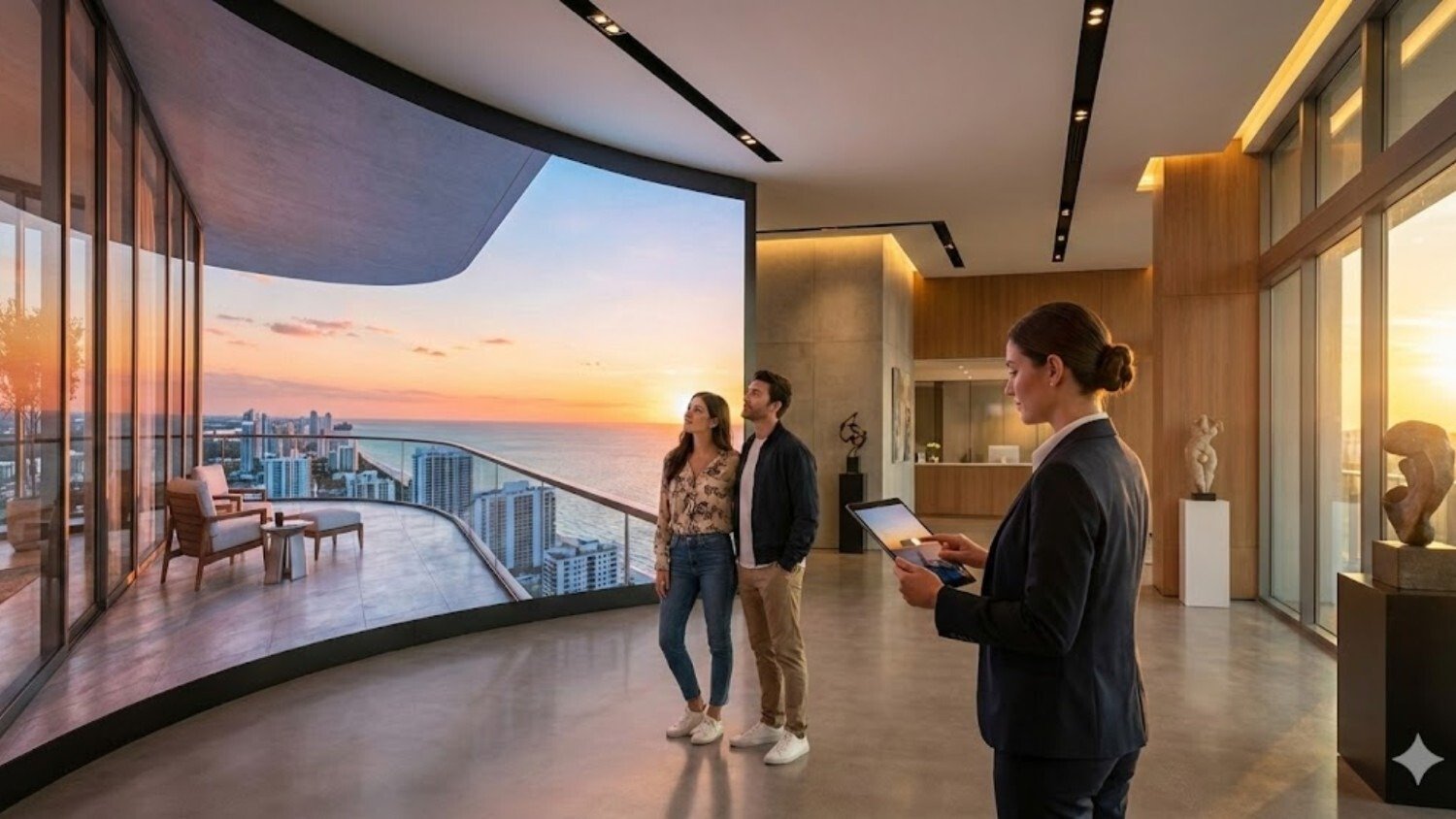
This isn't just about better graphics; it's about bringing the pipeline of a Hollywood blockbuster into the sales center. Using game engines like Unreal Engine 5, developers are creating "digital twins" of properties that are physically accurate down to the lighting physics.
Agencies like Theia Interactive and Neoscape are pioneers in this space. They aren't just making videos; they are building fully interactive, real-time environments. A prospective buyer can walk into a sales center, look at a screen (or an LED wall), and instantly change the kitchen finishes from marble to quartz, or fast-forward time to see exactly how the sunset hits the balcony in November versus July.
This is "Real-time Rendering" in action. It allows the customer to "live" in the space before the ground is even broken. It shifts the dynamic from "Trust us, it will be beautiful" to "Here, experience it for yourself."
Retail: Visualizing the Owned with Generative AI
While real estate uses game engines to build worlds, retail is using Generative AI to contextualize them.
The friction point in online retail has never been "What does the product look like?" High-res product photography solved that years ago. The friction point is, "What does it look like in my life?"
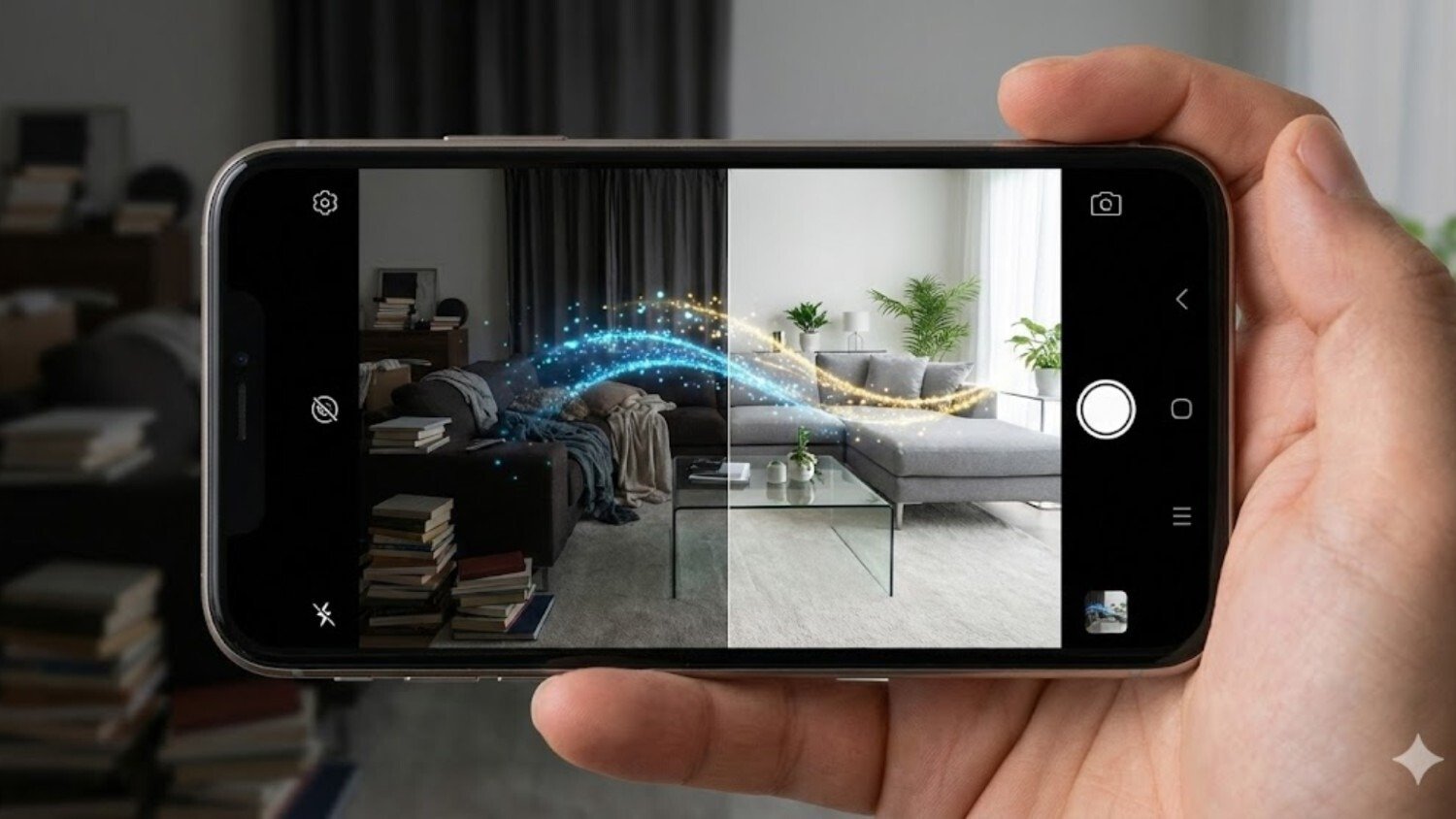
Augmented Reality (AR) tried to solve this with floating 3D models, but they often looked like stickers pasted onto your phone camera feed—unlit and unconvincing. Generative AI changes the physics of the interaction. It understands spatial context, lighting, and style.
Wayfair's "Decorify" is a prime example. Instead of just overlaying a chair, users upload a photo of their living room, and the Generative AI re-imagines the entire space in a new style (e.g., "Bohemian" or "Industrial"), seamlessly integrating shoppable products into the new image.
IKEA Kreativ takes it a step further. Their AI allows you to "erase" your existing furniture from a photo—filling in the background realistically—and then drop in new IKEA pieces that match the perspective and lighting of the room.
Amazon is rolling out AI-powered visual search and scene generation that allows customers to see products in a synthesized environment that mimics their taste.
The "Why It Works": A Systems & Marketing Perspective
From a systems engineering and marketing view, the effectiveness of these tools comes down to one critical metric: Cognitive Load.
Every sale is a system of inputs and outputs. The "Input" is the product information; the "Output" is the purchase decision. In the traditional model (blueprints/swatches), the customer has to perform a massive amount of "Processing" in their brain to convert those abstract inputs into a visualized reality. This creates a high cognitive load, which manifests as hesitation or anxiety ("The Imagination Gap").
High-fidelity VFX and GenAI bypass that processing stage.
- Blueprints: High Cognitive Load -> High Anxiety -> Slow Conversion.
- 4K Interactive Digital Twin: Zero Cognitive Load -> Emotional Connection -> Fast Conversion.
When a customer sees a photorealistic representation of their future home or living room, the brain processes it not as data, but as an experience. It triggers an emotional response—the feeling of ownership—that a technical drawing never could.
Conclusion
The future of the customer journey is immersive. As hardware becomes more accessible (think Apple Vision Pro) and software becomes more intelligent, the expectation for "try before you buy" will extend to every asset class.
We are leaving the era of "Imagine the possibilities." We are entering the era of "Step inside."